Home
1963-1964 All District Basketball League
- Details
- Written by: Bernard Punzalan
At the beginning season of the 1963-1964 All District Basketball League, the Merizo Angels (previously named “Oyeas”) were considered to be one of the most formidable teams to beat.
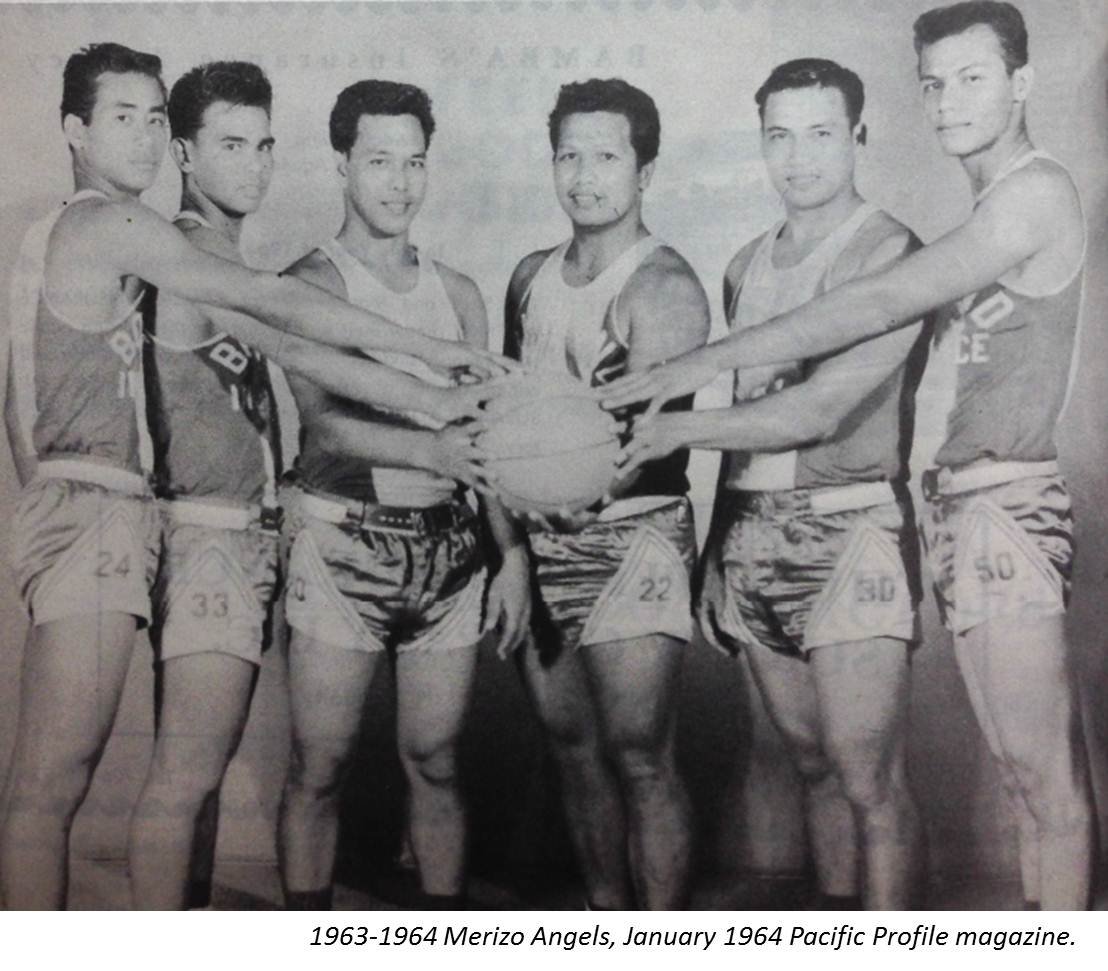
The Merizo Angels consisted of:
- Frank Roberto, Center and Team Captain
- Jesus Cruz
- Joe Barcinas
- Frank Meno
- Jesus Lujan
- Joseph Cruz
Other impressionable teams, former and current players with basketball talent were:
Sinajana Rockers
- Pete Duenas (former teammate, became a graduate of the Navy Apprentice School and was in the U.S.)
- John Cruz
- Felix Rivera
- Ignacio Perez
- John M. Cruz (former teammate)
- Benny Evangelista
- Ben Lizama
- Frank Toves
Umatac Mounties
- Ray Topasna
- Jesus Sanchez
- Joe Aguon
- Frank Isezaki
- Ralph Quinata (also a Babe Ruth league baseball player)
Tamuning
- Manuel Salas
- John Aguon
- Frank McMurray
- Jackson McMurray
Agat Trotters
- John Aguigui
- Jesus Nauta
- Frank Quintanilla
- Ben Salas
- Andy Sablan (also a Babe Ruth league baseball player)
- Tony Chargualaf (former teammate joined the Army)
Agana City Slickers
No current team members named; however, the team lost its former members:
- Jesus Ulloa (considered one of the best all-around players in the league)
- Tony Anderson (an authentic rebounder)
- Joe Roberto (younger brother of Merizo’s Center, Frank Roberto)
Source:
____. 1964. Merizo Angels: Who’ll Clip Their Wings, January, Volume II, No. 1. Pacific Profile. Agana. Guam
1964 Lookback: Guam’s Productivity
- Details
- Written by: Bernard Punzalan
In January of 1964, just 51 years ago, the second edition of Uncle Tony’s (Antonio Manibusan Palomo) Pacific Profile magazine was published. Part of this edition included the article, “Guam’s Productivity Is Tops in the World,” written by late Genevieve “Snookie” Perez Ploke Snow, the granddaughter of the late Atanasio Taitano Perez.
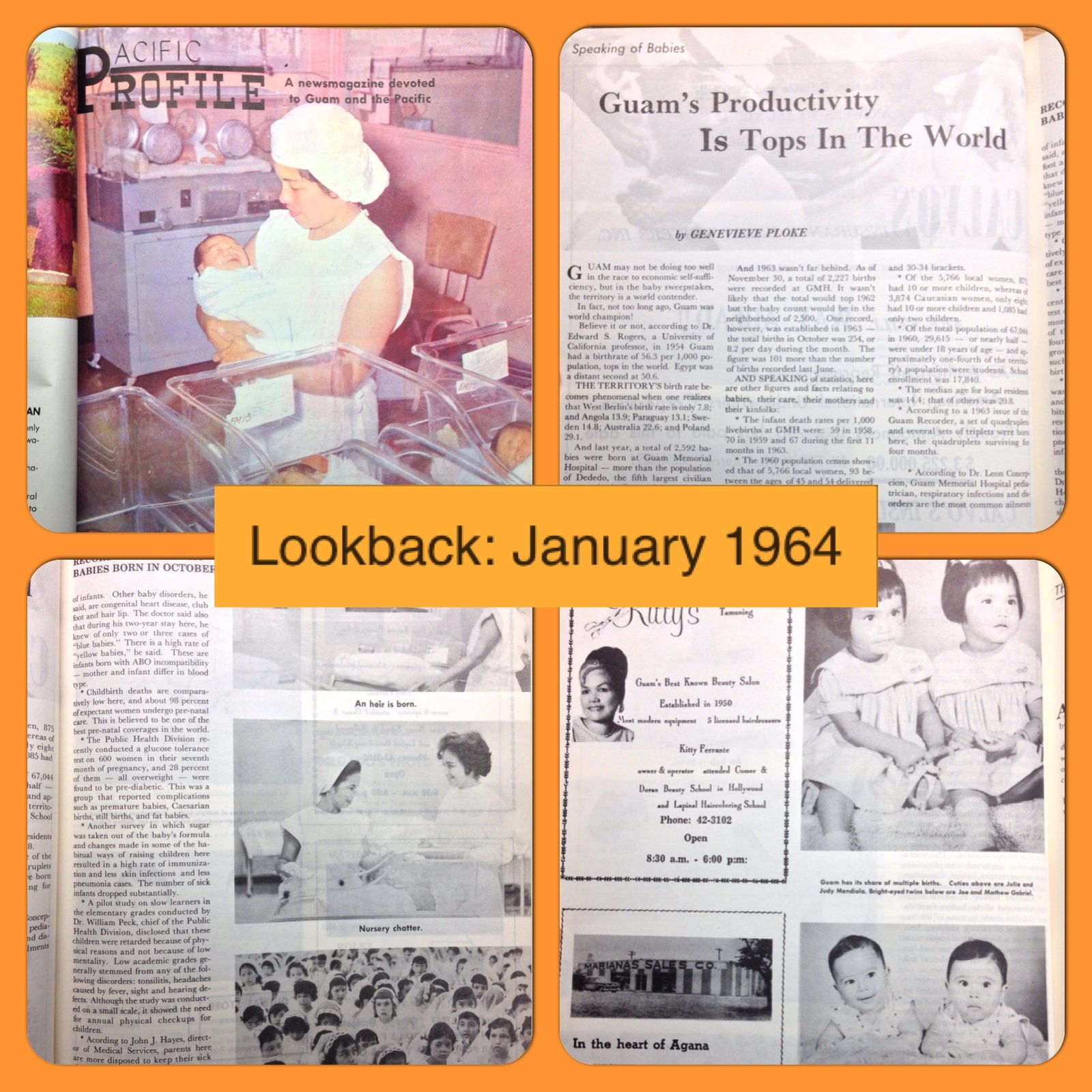
Genevieve provided some interesting statistics regarding Guam’s productivity of birth. Here were a few interesting stats she conveyed:
- In 1954 Guam’s birth rate was 56.3 per 1,000 populations, which at the time was highest in the world.
- In 1962, 2,592 babies were born at the Guam Memorial Hospital (GMH)
- During the month of August 1963, there was one baby born almost every three hours at GMH
- As of November 30, 1963 there were 2,227 births at GMH (was not expected to exceed the 1962 birth count)
- From the 1960 Census, of the 5,766 local women, 875 of them had 10 children or more
- In a 1963 Guam Recorder issue, it was reported that there was one set of quadruplets and several sets of triplets were born on Guam. Unfortunately, the quadruplets only survived for four months.
- Childbirth deaths were comparatively low and Guam was believed to be one of the best pre-natal coverages in the world.
The twins pictured in the bottom right frame are Julie and Judy Mendiola, and, Joe and Matthew Gabriel.
The Ifil Cross and the Ogo Family
- Details
- Written by: Bernard Punzalan
I enjoy coming across family stories and finding their names contained in the Chamorro Roots Genealogy Project database. After all, these are the stories of our people, resilience and faith.
The first time I came across the story of Magdalena and Francisco Ogo and the ifil cross was when I read the 1995 book I Manfåyi: Who’s Who in Chamorro History (Hale-ta Series Volume I). I recently came across the same story in the September 1965 edition of the Pacific Profiles, published by the late Antonio “Tony” Manibusan Palomo. For those of you from Yoña, you probably have heard of this story before.
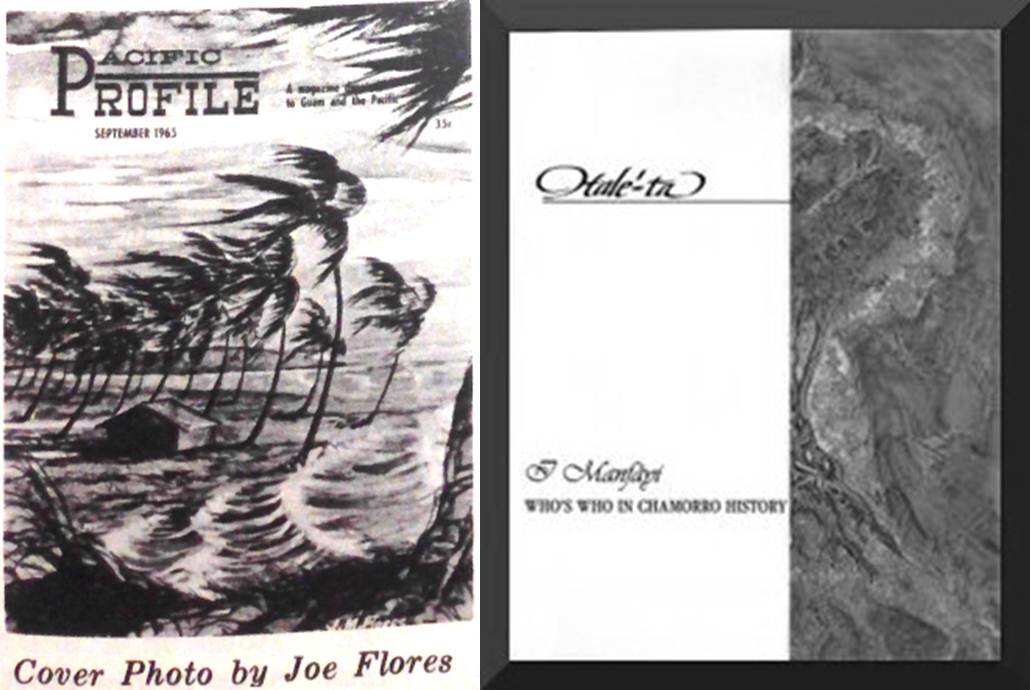
The ifil cross was and continues to remain of significant value to many of the people of Yoña because many pray before the cross for many reasons. Some stories of answered prayers included prayers for family members to get better from illnesses, bountiful harvests from farming and fishing, help in finding lost animals, and some just for plain old luck. The cross also became an important part of the Santa Cruz Chapel and nobenas.
A very brief part of the ifil cross story goes like this…
There once was a lady known as Magdalena “Patas” that owned an ifil cross. After she passed away sometime in 1910 a man named Mariano Rodriguez became the caretaker of the ifil cross. After Mariano’s passing, Francisco and Magdalena Sarmiento Ogo took the cross into their home and became the safe-keepers of the cross until the Chapel of Santa Cruz was built. By 1959, on land that was at one time owned by the Ogo family, Jose Blas had built the original Chapel of Santa Cruz, which then became the home of the ifil cross.
To this very day (at least since 1995, the year the I Manfåyi book was published) the descendants of Magdalena and Francisco Ogo continue the tradition of the annual Santa Cruz nobena that typically ends on the 3rd of May. However, the ifil cross remains at the site of the old Santa Cruz Chapel and family members are still trying to have the ifil cross moved to the site of the current Santa Cruz Chapel.
References:
____. 1965. Great-Great Grandmother Ogo. Pacific Profiles, September, Volume III, No. 7. Antonio “Tony” Palomo: Agana, Guam.
____. 1995. I Manfayi: Who’s Who in Chamorro History (Hale’ta Series), Volume I, pg 47. Dr. Katherine B. Aguon and The Political Status Coordinating Commission. Hagatna, Guam.
1930 Census of Guam – Most Common Names
- Details
- Written by: Bernard Punzalan
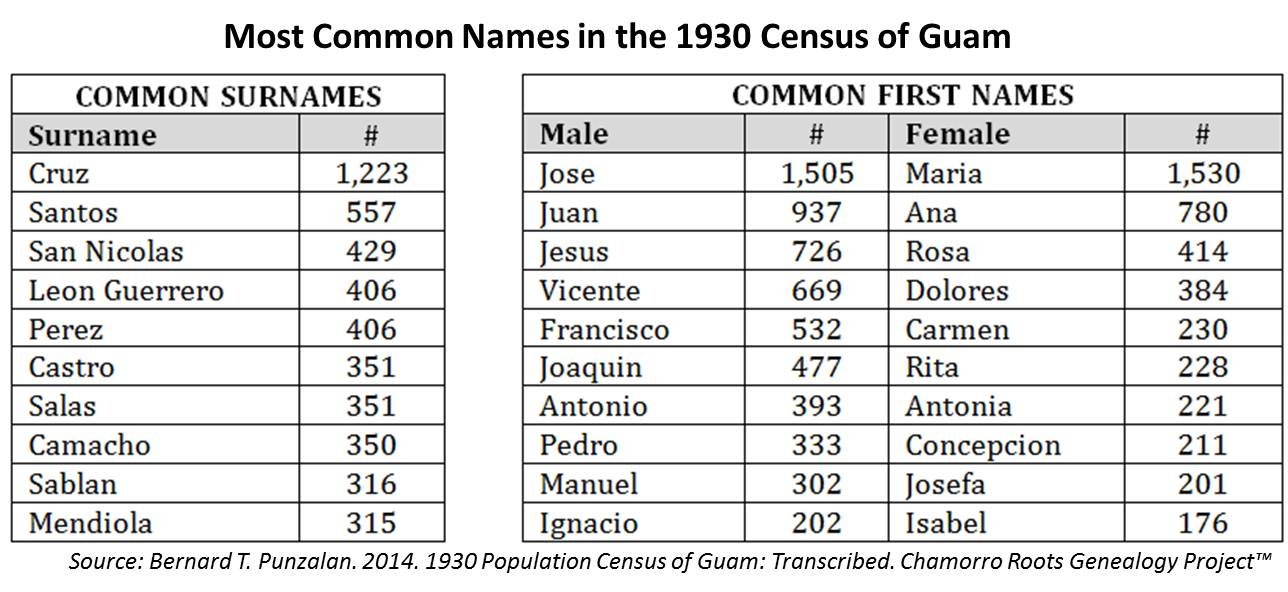
Within my census transcription books, I have compiled a table of the most common names one can find in the census of Guam. This particular image is a snapshot from my 1930 Census book.
Natural Resources for Your Christmas Décor (1965)
- Details
- Written by: Bernard Punzalan
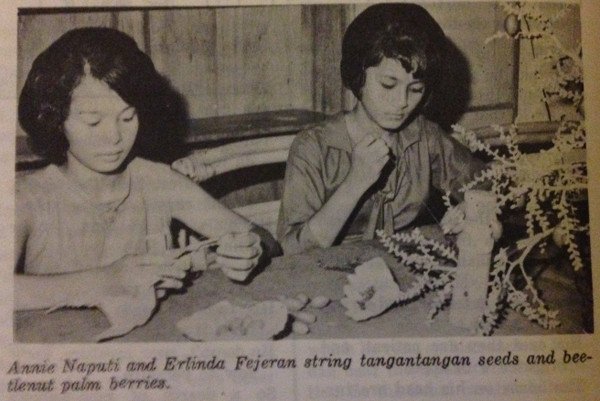
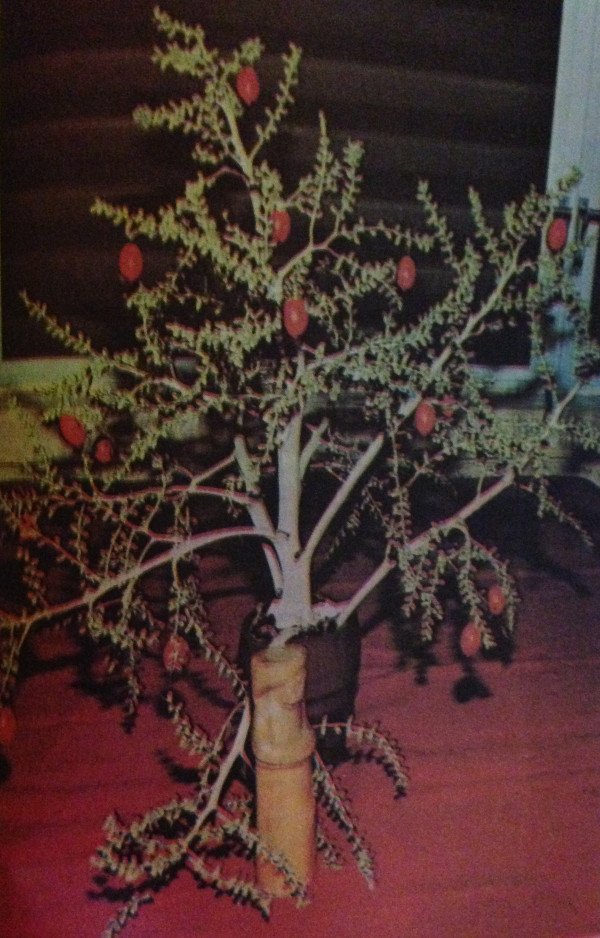
These photos are from the December 1965 edition of the Pacific Profile. Pictured is Annie Naputi and Erlinda Fejeran in the process of crafting some décor from tangantangan seeds and the pugua chino.
Fan Magof Hamyu Gi Ha’ånen Yu’us!
Page 46 of 84